

 |
| 

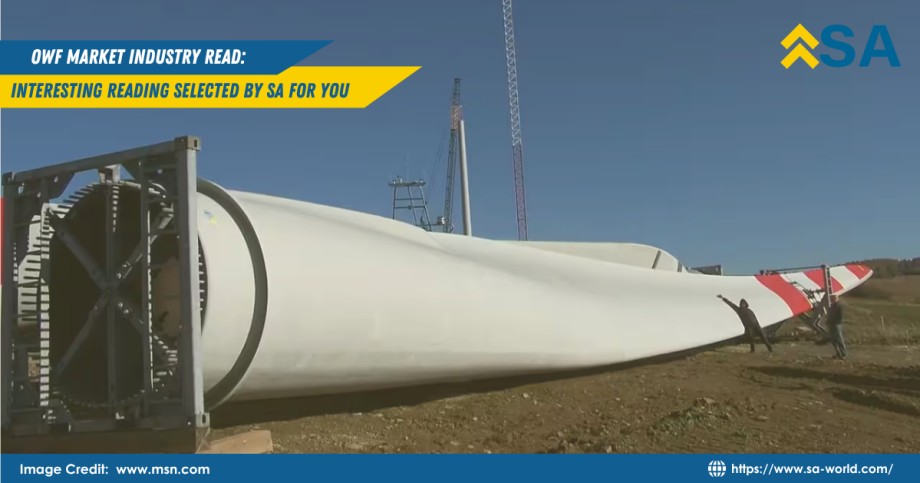
This article by The Times of India World Desk, highlighted a growing challenge for the wind industry: what happens to turbine blades when wind farms reach the end of their operational life? Unlike steel and other turbine components, composite blades made from fibreglass and resin are difficult to recycle, creating a significant end-of-life waste problem. Research cited in the article estimates that cumulative global wind-turbine blade waste could approach 43 million tonnes by 2050.
A Danish company, Miljøskærm, is demonstrating one alternative: transforming retired turbine blades into roadside noise barriers. Blades from Denmark's pioneering Vindeby offshore wind farm were reused after the wind farm was decommissioned in 2017. The blades can either be reused as structural elements or processed into fibreglass material that absorbs road noise.
The concept is part of a wider move toward a circular wind industry, where components are reused rather than sent to landfill or incineration. Research indicates that reusing blades can reduce their environmental footprint by approximately 14%–44% compared with landfill disposal.
Similar work is also being tested in the Netherlands, where a 60-metre Blade Barrier made from discarded turbine blades has demonstrated noise reduction comparable to a conventional concrete barrier.
Relevance to SA
This topic aligns with SA's role across the offshore wind and marine project lifecycle.
THE FOUR PILLARS OF SA
Your Trusted Partner for Project Execution
STAFFING SOLUTIONS
The right expertise, wherever the project takes place
Specialised personnel for survey, marine and subsea operations, ROV, diving, cable lay, installation and construction.
ENGINEERING
Engineering solutions for real offshore challenges.
From concept, FEED and detailed design to structural and hydrodynamic analysis, system integration, technical and interface management, bespoke equipment and installation engineering
ASSURANCE & COMPLIANCE
Independent insight. Greater confidence. Lower project risk.
Independent reviews, HAZOP, FMECA, HSE & operational risk audits, integrity verification, technical & regulatory compliance, gap analysis and failure investigation.
FABRICATION & MAINTENANCE
Turning engineering into operational assets.
Through strategic partners: fabrication, new construction, equipment overhaul, upgrades, maintenance, and shop & field repair.
Looking Ahead
The next phase of offshore wind is not just about building more turbines—it is about designing the entire asset lifecycle more responsibly.
The reuse of turbine blades as noise barriers is a good example of how a difficult waste stream can become a resource for another infrastructure sector. For companies operating across offshore wind, engineering and marine services, decommissioning, reuse and circularity are likely to become increasingly important areas of expertise.
